
SEO Dictionary: 50+ Essential Terms Every Marketer Should Know in 2026
Last Updated: February 2026
This SEO dictionary covers 50+ essential search engine optimization terms — from foundational concepts like backlinks and keywords to modern strategies like E-E-A-T, Core Web Vitals, and AI Overviews. Each term includes a clear definition, a practical example, and why it matters for your rankings. Whether you're optimizing a Ghost blog or running enterprise SEO, bookmark this page as your quick reference.
I've been working in digital marketing for over 12 years, and the SEO vocabulary has changed dramatically. Terms like "keyword density" and "PageRank" that dominated in 2013 have been replaced by concepts like topical authority, entity SEO, and generative engine optimization. This glossary reflects how SEO actually works in 2026 — not how it worked a decade ago.
How Is This SEO Dictionary Organized?
Terms are grouped into six categories so you can learn related concepts together. You can also jump to any term alphabetically using the index below.
Categories
| Category | What It Covers | Terms |
|---|---|---|
| Fundamentals | Core SEO concepts everyone needs | Algorithm, Crawling, Indexing, Keywords, SERP, Query, Ranking |
| On-Page SEO | Optimizing your own pages | Meta Tags, Schema Markup, Canonical Tag, Alt Text, Internal Linking, Keyword Density, Content Optimization |
| Off-Page SEO | Building authority externally | Backlinks, Link Building, Link Juice, Anchor Text, Domain Authority, Referring Domains |
| Technical SEO | Site infrastructure and performance | Core Web Vitals, Robots.txt, Sitemap, Crawl Budget, Rendering, Page Speed, HTTPS |
| Content & Quality | Content strategy and quality signals | E-E-A-T, Topical Authority, Helpful Content, Thin Content, Duplicate Content, Content Freshness |
| Modern SEO (2024-2026) | New concepts and AI-era SEO | AI Overviews, GEO, Zero-Click Searches, Entity SEO, Passage Ranking, People Also Ask, Answer Engine Optimization |
Alphabetical Index
A — AI Overviews | Algorithm | Alt Text | Anchor Text | Answer Engine Optimization
B — Backlinks | Black Hat SEO | Bounce Rate
C — Canonical Tag | Cloaking | Content Freshness | Core Web Vitals | Crawl Budget | Crawling | CTR
D — Domain Authority | Duplicate Content
E — E-E-A-T | Entity SEO
G — GEO (Generative Engine Optimization) | Google Algorithm Updates
H — Helpful Content | HTTPS
I — Indexing | Internal Linking
K — Keyword Cannibalization | Keyword Density | Keywords
L — Link Building | Link Juice | Long-Tail Keywords
M — Meta Tags
N — Nofollow
O — Off-Page SEO | On-Page SEO
P — Page Speed | Passage Ranking | People Also Ask
Q — Query
R — Ranking | Referring Domains | Rendering | Robots.txt
S — Schema Markup | SERP | Sitemap
T — Thin Content | Topical Authority
W — White Hat SEO
Z — Zero-Click Searches
SEO Fundamentals
Algorithm
Definition: A set of rules and calculations that search engines use to determine which pages appear in search results and in what order. Google's algorithm considers hundreds of ranking factors — from content relevance to page speed to backlink quality.
Example: When you search "best Ghost CMS themes," Google's algorithm evaluates thousands of pages and ranks them based on relevance, authority, and user experience signals.
Why it matters: Understanding that algorithms exist (and change frequently) helps you focus on sustainable SEO practices rather than trying to exploit temporary loopholes. Google makes thousands of algorithm updates per year, with major updates like the March 2024 Core Update significantly reshuffling rankings.
Crawling
Definition: The process by which search engine bots (like Googlebot) discover and download web pages by following links. Crawling is the first step in getting your content into search results.
Example: When you publish a new blog post on Ghost and it's linked from your homepage, Googlebot follows that link, downloads the page's HTML, and processes its content.
Why it matters: If search engines can't crawl your pages, they can't index or rank them. Broken links, blocked resources in robots.txt, or JavaScript-heavy pages that don't render properly can all prevent crawling.
Indexing
Definition: After crawling a page, search engines analyze its content and store it in their database (the "index"). Only indexed pages can appear in search results.
Example: You can check if your page is indexed by searching site:yourdomain.com/page-slug in Google. If it appears, it's indexed.
Why it matters: A page that's crawled but not indexed won't rank for anything. Common reasons for non-indexing include thin content, duplicate content, or a noindex meta tag. Google Search Console's "Pages" report shows your indexing status.
Keywords
Definition: The words and phrases that users type into search engines when looking for information. Keywords are the bridge between what people search for and the content you create.
Example: A user searching "how to add nofollow links in Ghost" is using a long-tail keyword. Your content should match this intent with a clear, direct answer.
Why it matters: Choosing the right keywords determines who finds your content. Keyword research is the foundation of every SEO strategy — it tells you what your audience actually searches for.
SERP (Search Engine Results Page)
Definition: The page displayed by a search engine after a user submits a query. Modern SERPs include organic results, paid ads, featured snippets, People Also Ask boxes, knowledge panels, AI Overviews, and more.
Example: A SERP for "Ghost CMS review" might show an AI Overview at the top, followed by review articles, a People Also Ask section, and YouTube videos.
Why it matters: SERP features have dramatically changed how users interact with search. According to research, over 58% of Google searches in the US result in zero clicks — meaning users get their answer directly from the SERP without visiting any website.
Query
Definition: The specific term or phrase a user types into a search engine. A query triggers the SERP. Queries can be informational ("what is SEO"), navigational ("Ghost CMS login"), or transactional ("buy Ghost Pro plan").
Example: The query "SEO dictionary" is what brought you to this page — it's an informational query seeking definitions.
Why it matters: Understanding query intent (what the user actually wants) is more important than matching exact keywords. Google's algorithm is sophisticated enough to understand that "best blogging platform" and "top blog software" mean the same thing.
Ranking
Definition: The position your page holds in search results for a specific query. Position 1 gets the most clicks, with CTR dropping sharply after position 3.
Example: If your page ranks #3 for "Ghost vs Medium," it appears as the third organic result on the SERP.
Why it matters: According to a Sistrix study, position 1 gets roughly 28.5% of clicks, position 2 gets 15.7%, and position 10 gets just 2.5%. Moving up even one position can significantly impact traffic.
On-Page SEO Terms
Meta Tags
Definition: HTML tags that provide information about a web page to search engines and browsers. The most important for SEO are the title tag (displayed as the clickable headline in search results) and the meta description (the snippet below the title).
Example: <title>SEO Dictionary: 50+ Terms for 2026</title> and <meta name="description" content="Complete SEO glossary...">
Why it matters: Title tags are a confirmed Google ranking factor. Meta descriptions don't directly affect rankings but influence click-through rates — a compelling description can double your CTR from the SERP.
Alt Text
Definition: A text description added to an image's HTML tag that tells search engines and screen readers what the image depicts. Alt text appears when an image fails to load.
Example: <img src="dashboard.png" alt="Ghost CMS admin dashboard showing the post editor with sidebar navigation and publishing options">
Why it matters: Alt text is how Google understands images for image SEO. Good alt text describes the scene and context — not just keyword stuffing like "SEO Ghost CMS blog." It's also required for web accessibility (WCAG compliance).
Anchor Text
Definition: The visible, clickable text in a hyperlink. Anchor text signals to search engines what the linked page is about.
Example: In the link <a href="/ghost-nofollow-link/">how to add nofollow links in Ghost</a>, the anchor text is "how to add nofollow links in Ghost."
Why it matters: Descriptive anchor text helps search engines understand linked page content. Over-optimized anchor text (using exact-match keywords repeatedly) can trigger Google penalties. Natural variation — mixing branded, descriptive, and generic anchors — is the safe approach.
Canonical Tag
Definition: An HTML element (rel="canonical") that tells search engines which version of a page is the "primary" one when similar or duplicate content exists at multiple URLs.
Example: <link rel="canonical" href="https://yourblog.com/seo-dictionary/">
Why it matters: Without canonical tags, search engines might split ranking signals across duplicate pages, weakening all of them. Ghost automatically sets canonical URLs for your posts, but custom implementations may need manual configuration.
Internal Linking
Definition: Links from one page on your website to another page on the same website. Internal links help search engines discover content and understand site structure.
Example: This dictionary links to our Ghost nofollow link guide when discussing nofollow — that's an internal link.
Why it matters: Internal links distribute authority (link juice) across your site and help users and search engines navigate related content. Pages with more internal links pointing to them tend to rank better. I prioritize linking from high-traffic pages to new or underperforming content.
Keyword Density
Definition: The percentage of times a keyword appears in a text compared to the total word count. Once considered a crucial ranking factor, keyword density is now largely irrelevant.
Example: In a 1,000-word article where "Ghost CMS" appears 15 times, the keyword density is 1.5%.
Why it matters: There is no ideal keyword density percentage. Google has repeatedly stated they don't use keyword density as a ranking signal. Write naturally for users, and keywords will appear at an appropriate frequency. Overusing keywords (keyword stuffing) actively harms your rankings.
Schema Markup
Definition: Structured data code (in JSON-LD, Microdata, or RDFa format) added to your HTML that helps search engines understand your content's meaning. Schema uses a shared vocabulary defined at schema.org.
Example: Adding FAQPage schema to this dictionary tells Google these are question-and-answer pairs, potentially earning a rich result with expandable FAQ sections directly in the SERP.
Why it matters: Schema doesn't directly boost rankings, but it enables rich results (star ratings, FAQ dropdowns, how-to steps, product pricing) that dramatically increase CTR. Google's Structured Data documentation lists all supported types.
Off-Page SEO Terms
Backlinks
Definition: Links from external websites pointing to your website. Backlinks are one of Google's strongest ranking signals — they act as "votes of confidence" from other sites.
Example: If Ahrefs blog links to your Ghost CMS guide, that's a backlink from a high-authority domain, which signals to Google that your content is trustworthy.
Why it matters: Quality matters far more than quantity. One backlink from a relevant, authoritative site (like a major tech publication) is worth more than 100 links from low-quality directories. Building backlinks naturally through great content is the safest long-term strategy.
Link Building
Definition: The process of acquiring backlinks from other websites to improve your site's authority and rankings. Ethical link building focuses on creating valuable content that others want to reference.
Example: Publishing an original research study, creating a comprehensive resource (like this dictionary), or guest posting on authoritative sites are all link building tactics.
Why it matters: Despite Google's increasing ability to rank content without links, backlinks remain one of the top 3 ranking factors. The key is earning links through content quality rather than buying or manipulating them.
Link Juice
Definition: The authority or ranking power that one page passes to another through a link. When a high-authority page links to your content, it shares some of its "juice" (ranking power) with you.
Example: A homepage with strong authority linking to an internal blog post passes link juice to that post, helping it rank better. The more links a page has, the more the juice is diluted across them.
Why it matters: Understanding link juice helps you design your site's internal linking strategy. Pages you want to rank highest should receive the most internal links from your strongest pages.
Domain Authority
Definition: A score (typically 1-100) that predicts how likely a domain is to rank in search results. Domain Authority (DA) is a metric created by Moz — it's not a Google metric, but it correlates with ranking performance.
Example: Wikipedia has a DA of 100. A new blog might start at DA 10-15. Building quality backlinks gradually increases your DA over months and years.
Why it matters: DA is useful for comparing your site against competitors and evaluating potential link partners. However, don't obsess over it — Google doesn't use DA. Focus on the factors that DA measures (quality backlinks, site age, content quality) rather than the score itself.
Referring Domains
Definition: The number of unique websites (domains) that link to your site. This is often more important than total backlink count because 10 links from 10 different domains carries more weight than 10 links from one domain.
Example: If Ahrefs, Moz, and Search Engine Journal each link to your page once, you have 3 referring domains and 3 backlinks. If Ahrefs links to you 5 times, you have 1 referring domain and 5 backlinks.
Why it matters: Referring domain diversity is a strong ranking signal. Google values endorsements from many different sources over repeated links from a single source.
Nofollow
Definition: A link attribute (rel="nofollow") that tells search engines not to pass ranking authority through the link. Related attributes include rel="sponsored" for paid links and rel="ugc" for user-generated content links.
Example: <a href="https://example.com" rel="nofollow">Example</a>
Why it matters: Use nofollow for links you don't want to endorse — affiliate links, sponsored content, and untrusted sources. Since 2019, Google treats nofollow as a "hint" rather than a directive, meaning they may still follow and value nofollow links. See our complete guide on how to add nofollow links in Ghost.
Technical SEO Terms
Core Web Vitals
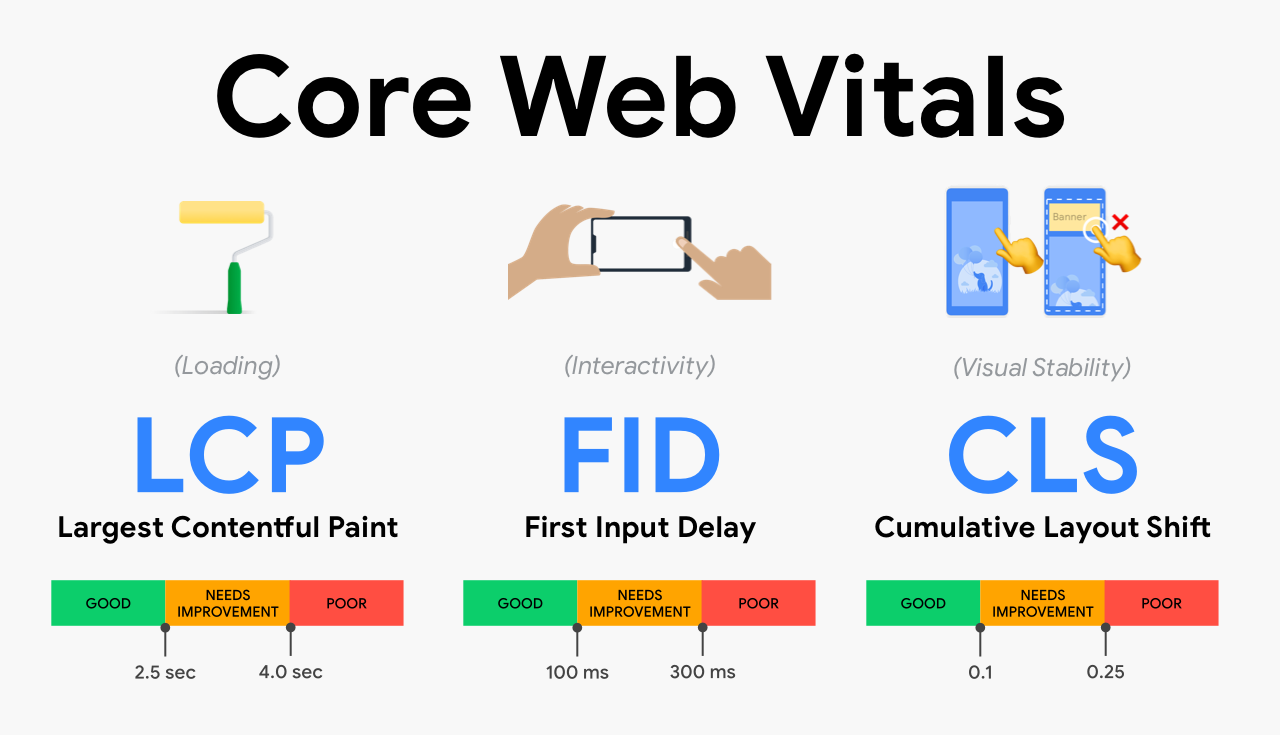
Definition: A set of three specific metrics that Google uses to measure user experience on web pages: LCP (Largest Contentful Paint — loading speed), INP (Interaction to Next Paint — interactivity responsiveness), and CLS (Cumulative Layout Shift — visual stability).
| Metric | Measures | Good | Needs Improvement | Poor |
|---|---|---|---|---|
| LCP | Loading speed | ≤ 2.5s | 2.5s–4.0s | > 4.0s |
| INP | Interactivity | ≤ 200ms | 200ms–500ms | > 500ms |
| CLS | Visual stability | ≤ 0.1 | 0.1–0.25 | > 0.25 |
Why it matters: Core Web Vitals became a ranking factor in 2021 and have grown in importance since. In March 2024, INP replaced FID (First Input Delay) as the interactivity metric. You can check your scores in PageSpeed Insights or Google Search Console. Learn more in our guide on how to measure SEO results.
Robots.txt
Definition: A text file at your domain's root (e.g., yourdomain.com/robots.txt) that tells search engine crawlers which pages or sections of your site they should or shouldn't crawl.
Example: Disallow: /admin/ tells crawlers not to crawl your admin pages. Allow: / means everything is crawlable.
Why it matters: Robots.txt controls crawl behavior but does NOT prevent indexing. If a page is blocked by robots.txt but linked from elsewhere, Google might still index the URL (showing "No information is available for this page"). Use the noindex meta tag instead if you want to prevent indexing.
Sitemap
Definition: An XML file that lists all important pages on your website, helping search engines discover and crawl your content efficiently. Ghost automatically generates a sitemap at /sitemap.xml.
Example: Visit https://seocontentai.com/sitemap.xml to see this site's sitemap — it includes all published posts, pages, tags, and authors.
Why it matters: Sitemaps are especially important for new sites, large sites, and sites with pages that aren't well-linked internally. Submitting your sitemap to Google Search Console helps ensure all your content is discovered quickly.
Crawl Budget
Definition: The number of pages Googlebot will crawl on your site within a given timeframe. Google allocates crawl budget based on your site's size, health, and authority.
Example: A small Ghost blog with 50 posts has minimal crawl budget concerns — Google will crawl everything. A large e-commerce site with 500,000 pages needs to optimize crawl budget by removing low-value pages from the crawl path.
Why it matters: For most small-to-medium sites, crawl budget isn't a concern. It becomes critical for large sites where wasting crawl budget on parameter URLs, faceted navigation, or duplicate pages means important content gets crawled less frequently.
Page Speed
Definition: How fast your web page loads and becomes interactive. Measured through Core Web Vitals and supplementary metrics like Time to First Byte (TTFB) and First Contentful Paint (FCP).
Example: A Ghost blog typically loads in 1-2 seconds because Ghost generates static HTML. A WordPress site with 30 plugins might take 4-6 seconds.
Why it matters: Slow pages lose visitors — Google research shows that 53% of mobile users abandon sites that take longer than 3 seconds to load. Page speed is a ranking factor, and faster sites consistently outperform slower competitors.
Rendering
Definition: The process of executing JavaScript and building the visual page that users see. Search engines must render JavaScript-heavy pages to understand their content, which can delay indexing.
Example: A React single-page application requires rendering to see its content. Ghost uses server-side rendering, so content is immediately visible in the HTML — no rendering needed.
Why it matters: Client-side rendered (CSR) content may take days or weeks longer to be indexed compared to server-side rendered content. Ghost's architecture is inherently SEO-friendly because it serves fully rendered HTML.
HTTPS
Definition: The secure version of HTTP, using SSL/TLS encryption to protect data transferred between a user's browser and your website. Identified by the padlock icon in the browser address bar.
Example: https://seocontentai.com is secure; http://seocontentai.com is not.
Why it matters: HTTPS has been a Google ranking signal since 2014. All Ghost Pro sites include HTTPS by default. Beyond SEO, browsers now label HTTP sites as "Not Secure," which destroys user trust.
Content and Quality Terms
E-E-A-T (Experience, Expertise, Authoritativeness, Trustworthiness)
Definition: Google's framework for evaluating content quality, used by human quality raters to assess search results. The extra "E" for Experience was added in December 2022 to emphasize first-hand, lived experience.
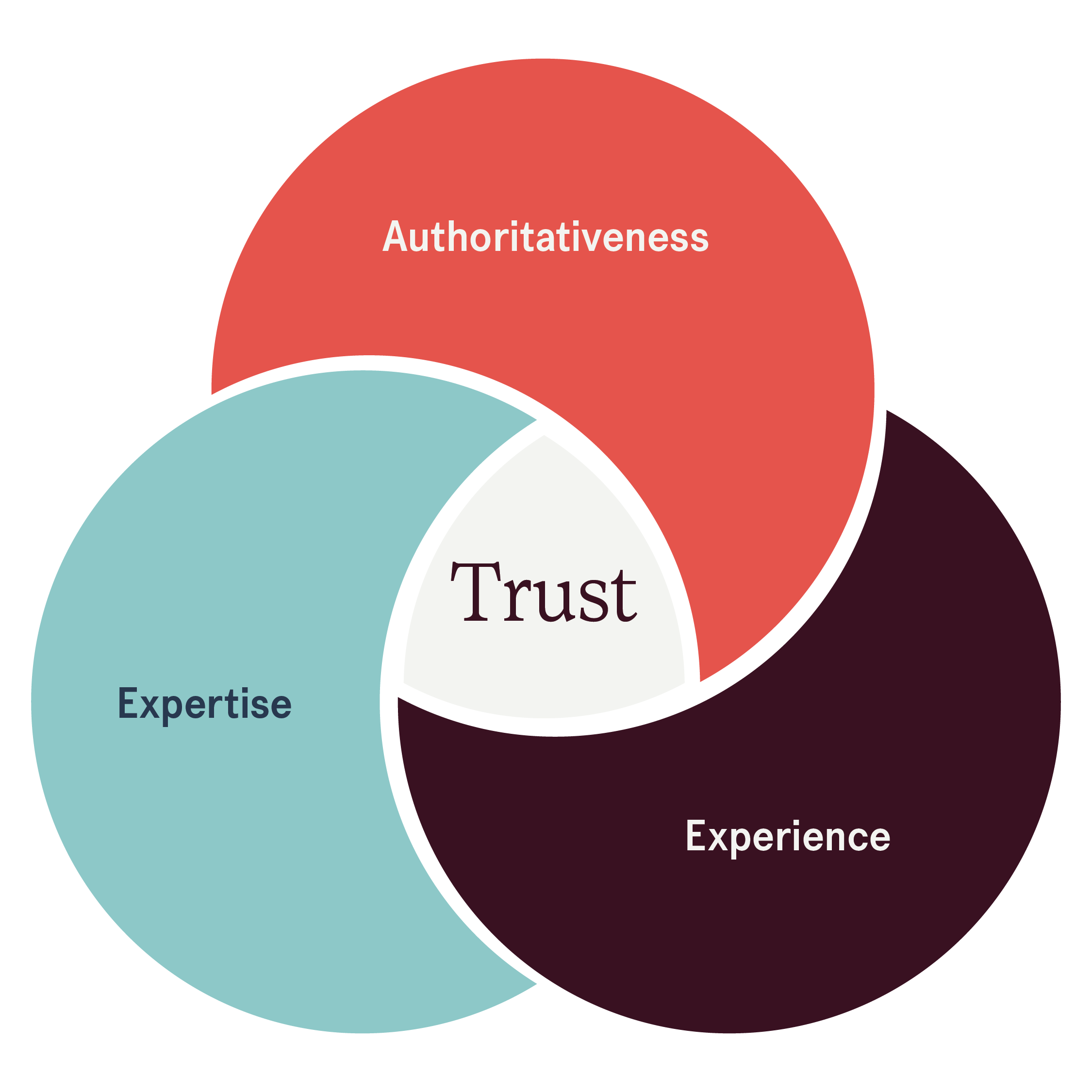
- Experience — has the author actually used the product, visited the place, or done the thing?
- Expertise — does the author have knowledge or credentials in this topic?
- Authoritativeness — is the author or site recognized as a go-to source?
- Trustworthiness — is the content accurate, transparent, and honest?
Why it matters: E-E-A-T isn't a direct ranking algorithm, but it shapes how Google evaluates content quality. Pages about health, finance, and legal topics (YMYL — "Your Money or Your Life") face the strictest E-E-A-T scrutiny. In practice, this means including author bios, citing sources, and demonstrating first-hand experience in your content. Read Google's Quality Rater Guidelines for the full framework.
Topical Authority
Definition: A site's perceived expertise on a specific subject, built by publishing comprehensive, interlinked content across all aspects of a topic rather than isolated articles.
Example: seocontentai.com builds topical authority on "Ghost CMS SEO" by publishing articles on SEO tools for Ghost, nofollow links in Ghost, image optimization for Ghost, and this SEO dictionary — all interlinked.
Why it matters: Google increasingly rewards depth over breadth. A site with 20 well-linked articles about Ghost CMS will outrank a site with 1 article about Ghost CMS and 19 about unrelated topics, even if the single article is technically better.
Helpful Content
Definition: Content that is created primarily for people (not search engines), provides genuine value, and satisfies the user's search intent. Google's Helpful Content system, launched in August 2022 and integrated into the core algorithm in March 2024, evaluates content on a site-wide basis.
Example: A "helpful" Ghost CMS review includes hands-on screenshots, personal experience, pricing breakdowns, and honest pros/cons — not a rewritten product page.
Why it matters: The Helpful Content system can demote an entire site if Google determines a significant portion of its content is "unhelpful" (written primarily for search engines rather than users). This has had a particularly strong impact on AI-generated content farms.
Thin Content
Definition: Pages with little or no original value — either too short, duplicated from elsewhere, auto-generated, or lacking depth. Google's algorithms actively identify and demote thin content.
Example: A 200-word blog post that says "Ghost CMS is a great blogging platform" with no detail, evidence, or practical guidance is thin content.
Why it matters: Thin content wastes crawl budget and can drag down your entire site's quality perception. If you have thin pages, either expand them with genuine value or remove/noindex them.
Duplicate Content
Definition: Substantively similar content appearing at multiple URLs, either on the same site (internal duplication) or across different sites (external duplication). It's not a "penalty" but causes ranking dilution.
Example: Having both yourblog.com/page and yourblog.com/page?ref=twitter serving the same content creates internal duplication.
Why it matters: When duplicate pages exist, Google must choose which version to rank, and it might not choose the one you prefer. Canonical tags solve this by declaring the preferred version.
Content Freshness
Definition: How recently content was created or substantially updated. Google's freshness signals reward updated content for queries where recency matters.
Example: A "Best SEO Tools 2024" article will lose rankings in 2026 because users want current recommendations. Updating the title, data, and content to reflect 2026 restores freshness signals.
Why it matters: Not all queries benefit from freshness — a page about "how photosynthesis works" doesn't need yearly updates. But for technology, pricing, "best of" lists, and trend-dependent topics, content freshness is a significant ranking factor. Google's dateModified signal tracks when pages were last meaningfully updated.
Modern SEO Terms (2024-2026)
AI Overviews (formerly SGE)
Definition: AI-generated summaries that appear at the top of Google search results for certain queries. Launched as "Search Generative Experience" (SGE) in 2023 and rebranded to "AI Overviews" in May 2024, these panels synthesize information from multiple sources to provide a direct answer.
Example: Searching "what is Ghost CMS" might trigger an AI Overview that summarizes Ghost's features, pricing, and use cases — pulling information from ghost.org, review sites, and blog posts.
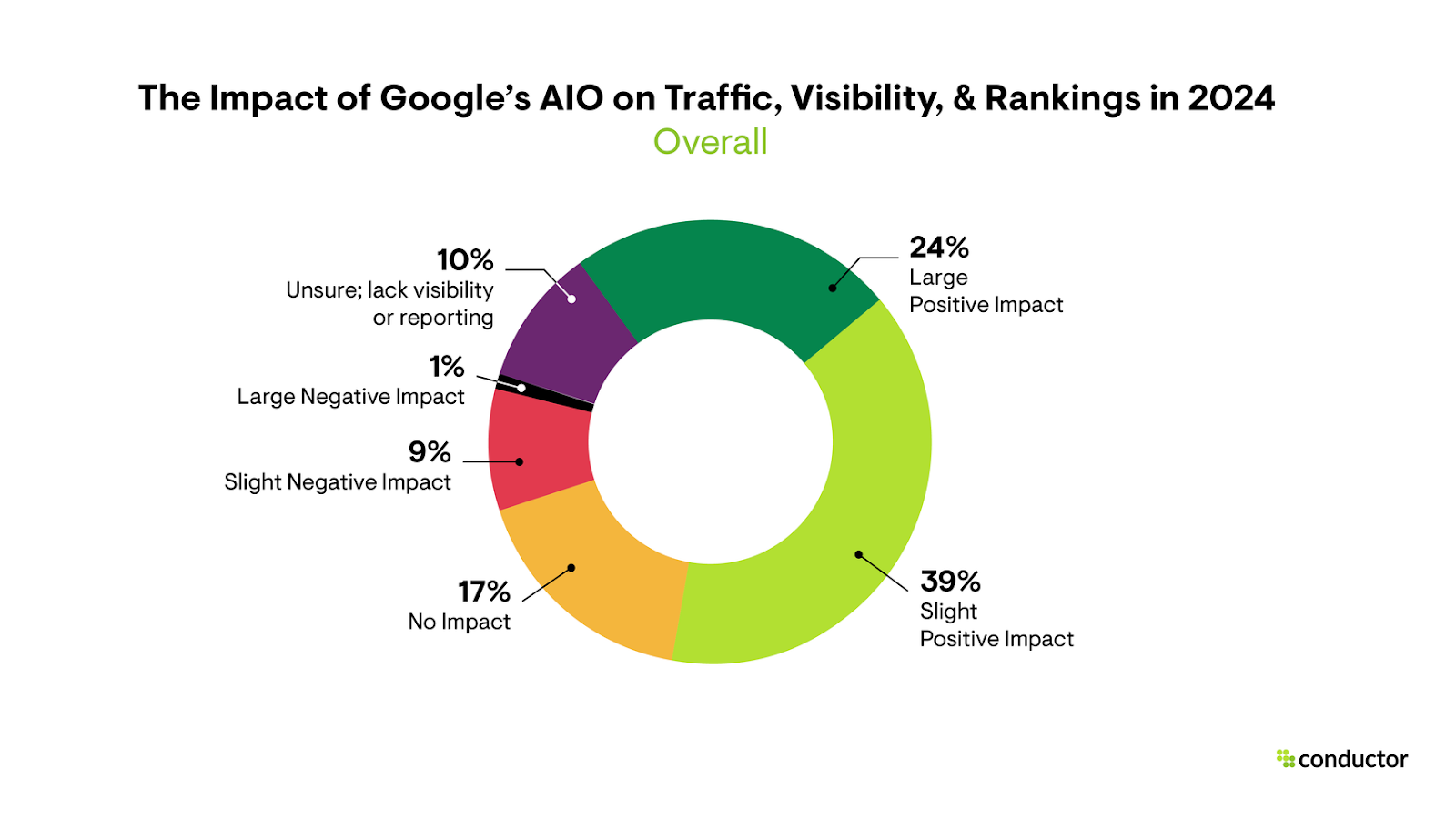
Why it matters: AI Overviews can reduce click-through rates to websites by answering queries directly in the SERP. However, sources cited in AI Overviews often see increased traffic. The key is creating content that AI systems want to cite — factual, well-structured, and authoritative. This is driving the rise of GEO.
GEO (Generative Engine Optimization)
Definition: The practice of optimizing content to be cited and referenced by AI systems (ChatGPT, Google AI Overviews, Perplexity, Claude) in addition to traditional search rankings. GEO focuses on making content quotable, factually verifiable, and structurally clear.
Example: Writing "Ghost CMS is an open-source publishing platform used by over 3 million websites" is more quotable by AI systems than "Ghost is a really great platform that many people use."
Why it matters: As AI-powered search grows, content that isn't optimized for AI citation will lose visibility. GEO principles include: clear factual statements, comparison tables, structured data, cited statistics, and consensus-first writing (state accepted facts before introducing unique perspectives).
Zero-Click Searches
Definition: Search queries where the user gets their answer directly from the SERP without clicking through to any website. Driven by featured snippets, knowledge panels, AI Overviews, and instant answers.
Example: Searching "what time is it in Tokyo" or "how tall is the Eiffel Tower" — Google answers directly, no click needed.
Why it matters: Over 58% of Google searches now result in zero clicks. This doesn't mean SEO is dead — it means you need to target queries with click-worthy intent (commercial, comparison, how-to) and optimize for SERP features that still drive traffic (featured snippets, People Also Ask).
Entity SEO
Definition: Optimizing content around entities (people, places, organizations, concepts) rather than just keywords. Google's Knowledge Graph connects entities and their relationships to better understand search intent.
Example: Instead of optimizing for the keyword string "ghost blogging platform," entity SEO ensures Google understands that "Ghost" (the entity) is a publishing platform created by John O'Nolan, that it's open-source, that it competes with WordPress and Medium.
Why it matters: Google increasingly understands topics as interconnected entities rather than keyword strings. Establishing your brand, author, or product as a recognized entity (with a Knowledge Graph entry, Wikipedia presence, or Wikidata listing) strengthens your topical authority signals.
Passage Ranking
Definition: Google's ability to rank specific passages within a page independently, even if the overall page targets a different topic. Launched in February 2021.
Example: A long guide about "Ghost CMS" might have a paragraph about Ghost's pricing that ranks for "how much does Ghost CMS cost" — even though the page's primary topic is broader.
Why it matters: Passage ranking means every section of your content is a potential ranking entry point. This rewards comprehensive, well-structured content with clear headings and self-contained sections — exactly the format this dictionary uses.
People Also Ask (PAA)
Definition: An expandable section in Google search results showing related questions that users commonly ask. Each question reveals a short answer snippet pulled from a web page, with a link to the source.
Example: Searching "what is SEO" might show PAA questions like "Is SEO still worth it in 2026?", "How long does SEO take to work?", and "What are the 4 types of SEO?"
Why it matters: PAA boxes are a major source of organic visibility. To target them, structure your content with question-based headings (H2s/H3s) and provide direct, concise answers in the first 1-2 sentences of each section. PAA answers typically come from the top 10-20 ranking pages.
Answer Engine Optimization (AEO)
Definition: Optimizing content specifically to be selected as the source for featured snippets, voice search answers, and AI-generated responses. AEO focuses on direct, concise answers to specific questions.
Example: Starting an H2 section with a clear 40-60 word answer (an "Answer Capsule") that directly addresses the heading question, followed by supporting detail.
Why it matters: As search evolves from "10 blue links" to direct answers (via featured snippets, voice assistants, and AI Overviews), content optimized for answer extraction wins visibility. AEO and GEO are closely related — both prioritize quotable, structured, factual content.
Black Hat vs. White Hat SEO
Black Hat SEO
Definition: SEO techniques that violate search engine guidelines to manipulate rankings. These practices can result in manual penalties or algorithmic demotion.
Common techniques to avoid:
- Keyword stuffing — unnaturally repeating keywords throughout content
- Cloaking — showing different content to search engines than to users
- Link schemes — buying links, excessive link exchanges, or using private blog networks (PBNs)
- Spinning — auto-generating "unique" content by swapping synonyms in existing articles
- Hidden text — placing keyword-stuffed text in the same color as the background
Why it matters: Black hat techniques may provide short-term gains but carry severe long-term risks. Google's Spam Brain AI system, updated continuously, is increasingly effective at detecting and penalizing manipulative practices.
White Hat SEO
Definition: SEO techniques that follow search engine guidelines and focus on providing genuine value to users. White hat practices build sustainable, long-term rankings.
Core practices:
- Creating original, helpful content that satisfies user intent
- Building backlinks through content quality and genuine outreach
- Optimizing page speed and user experience
- Using proper technical SEO (structured data, canonical tags, sitemaps)
- Writing descriptive meta tags and alt text
Why it matters: Every algorithm update rewards white hat practices and punishes black hat techniques. In my 12 years of digital marketing, I've never seen a black hat strategy that survived more than 2-3 algorithm updates.
Quick Reference: SEO Acronyms
| Acronym | Full Name | Category |
|---|---|---|
| AEO | Answer Engine Optimization | Modern SEO |
| CLS | Cumulative Layout Shift | Technical SEO |
| CMS | Content Management System | General |
| CTR | Click-Through Rate | Metrics |
| CWV | Core Web Vitals | Technical SEO |
| DA | Domain Authority | Off-Page SEO |
| E-E-A-T | Experience, Expertise, Authoritativeness, Trustworthiness | Content Quality |
| FCP | First Contentful Paint | Technical SEO |
| GEO | Generative Engine Optimization | Modern SEO |
| GSC | Google Search Console | Tools |
| INP | Interaction to Next Paint | Technical SEO |
| LCP | Largest Contentful Paint | Technical SEO |
| PAA | People Also Ask | SERP Features |
| PBN | Private Blog Network | Black Hat SEO |
| SERP | Search Engine Results Page | Fundamentals |
| SGE | Search Generative Experience (now AI Overviews) | Modern SEO |
| TTFB | Time to First Byte | Technical SEO |
| UGC | User-Generated Content | Off-Page SEO |
| YMYL | Your Money or Your Life | Content Quality |
Frequently Asked Questions
What SEO terms should beginners learn first?
Start with the fundamentals: keywords, SERP, indexing, backlinks, and meta tags. These five concepts form the foundation of everything else. Once comfortable, move to on-page optimization (alt text, internal linking, schema) and then technical SEO (Core Web Vitals, page speed).
What's the most important SEO concept in 2026?
E-E-A-T and helpful content. Google's algorithms increasingly prioritize content created by people with real experience and genuine expertise. Technical SEO is table stakes — content quality and author credibility are the differentiators.
How has SEO vocabulary changed with AI?
AI has introduced entirely new terms: AI Overviews, GEO (Generative Engine Optimization), Answer Engine Optimization, and entity SEO. The shift is from optimizing for "10 blue links" to optimizing for AI citation and direct answer extraction. Traditional terms like keyword density and PageRank have become largely irrelevant.
Where can I learn more about Ghost CMS SEO?
Check out our other guides: SEO tools for Ghost, image optimization for Ghost, nofollow links in Ghost, and Ghost vs Medium comparison.